Forestminds – Balancing Mind and Body in Nature
Forestminds is a well-being method that connects the scientifically proven health effects of nature with versatile mind skills exercises. Developed in Finland since the early 2000s, this method offers a structured yet deeply personal way to cultivate everyday well-being, reduce stress and strengthen psychological resilience.
The Forestminds method consists of over 200 exercises focusing on presence, relaxation, refreshment, resourcefulness, and core mind skills. It is designed to be practiced alone, in pairs, or within professional, educational, and recreational groups.
The Power of Nature for Mind Skills
Nature is the ultimate environment for recovery and personal growth. Being in a natural setting lowers stress hormones like cortisol, improves concentration, and automatically triggers the body's parasympathetic nervous system to initiate recovery.
By intentionally practicing Forestminds in nature environments, you can:
- Increase self-awareness by recognizing your physical senses, thoughts, and emotional reactions.
- Build resilience and the mental agility needed to navigate life's inevitable changes and hardships.
- Maintain psychological well-being as a lifelong process just as vital as physical conditioning.
The Forestminds method uses nature as an environment, where people can find calming space and time to train mind skills. Mind skills are important modern day life skills just like manual skills once were. Threats to our well-being have to do more and more with problems of life control, emotional life and communication. Mind skills are tools of psychic well-being that maintain and improve self-awareness, satisfaction in life and the experience of having a balanced life. They help us adapt flexibly to life happenings and the constantly changing circumstances.
Tailored for Any Environment
Everyone has a unique, personal relationship with nature. Because of this, Forestminds exercises are highly flexible. They do not require a vast, untouched wilderness—you can experience the benefits of the method in:
- Public city parks and community spaces.
- Private backyard gardens and home patios
- Indoor spaces, by utilizing natural imagery and landscape visualization
- Everywhere in the nature
- Deep forests and conservation areas
Multi-Disciplinary and Scientifically Backed
The strength of Forestminds method lies in it´s background based on scientific research.The foundation of Forestminds lies in rigorous research surrounding both physical and psychological health. The method successfully blends verified natural health benefits with modern psychology, behavioral sciences, mindfulness, Acceptance and Commitment Therapy (ACT) and cognitive behavioral therapy.
Furthermore, when practiced in courses or guided groups, the method utilizes the power of appreciative peer-to-peer interaction and shared reflections. This allows participants to collectively explore everyday well-being and life's deeper adjustments together.
Forestminds structured exercises move from lighter levels toward deeper ones, and the method is experiential, effective, practical and applicable to different client groups or individuals. Forestminds clear structure helps to plan excursions and events into effective, client-serving wholes. Planning and theming are easy with the Forestminds toolbox and materials.
The three categories of Forestminds Exercises
1. Seed exercises relax, soothe and refresh. Get started of these.
2. Plant exercises help identify events in your mind, acceptance, understanding and structuring. These exercises produce experience of presence and calming. Plant exercises can also be done in a group.
3. Tree exercises help to brighten thoughts in challenging life situations and changes. These exercises are best suited with Forestminds Guide or Instructor.
Weekly path (Seed exercise)
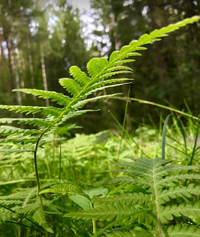
The well-being and health effects of nature are best recharged if you visit nature regularly. Would a weekly walk near your home be a good idea for you? At the same time, you would notice the special features of different seasons, the moods of nature and their effects on your own mood.
1. Take your favorite forest trail or park trail weekly. Please note how the season affects nature and yourself.
2. What has changed in nature since last week? What kind of details do you notice)
3. What will next week bring when it comes? Are the widow's leaves already bud, the trees leaves yellowed, etc.?
4. What kind of continuity and optimism do you notice in the cycle of nature?
Move your thoughts (Plant exercise)
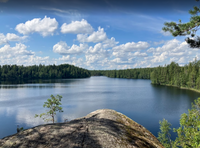
Nature offers you safety space to recognize, accept and evaluate your own thoughts. This exercise helps to recognize how feelings and thoughts are intertwined. The skill of changing perspectives helps you to be more resilient.
1. Stop to observe clouds in a clear sky or flowing water in a stream.
2. Give all your attention to the shapes and movements of the clouds or water.
3. Whenever a thought comes into your mind, greet it kindly.
4. Consider that thought for a moment: is this idea useful or necessary at this exact time and place?
5. Decide to allow the thought to continue its journey.
6. When you decide to let go of the idea, imagine that you are placing your thought onto that cloud or stream so that it can continue its journey.
7. Watch and imagine the thought being carried away.
8. Return your attention back to observing the clouds or water.
9. Continue your journey and reflect on the observations you made during the exercise.
The Resource Board (Tree exercise)
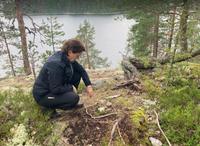
Different seasons are perfect moments to weigh and update your resources, values, and direction in life. Take a moment for yourself and head out into nearby nature to create your own Resource Board.
1. Find a spot
Head to a forest path, a sandy clearing, or a peaceful forest meadow.
2. Create the frame
Draw the frame of your board on the ground with a stick. You can also shape it using stones, twigs, or pinecones.
3. Gather your materials
Look for fallen branches, flowers, and pinecones on the ground. Please remember to respect nature – do not tear living trees, moss, or lichen.
4. Mark the present
Place a symbol on your board that represents your current life situation.
5. Identify your values
Reflect on the most important pillars of your life, the people, and the things you want to do your best for. Mark these values and your loved ones on the board with their own symbols.
6. Head toward the future
Draw a line or a path on the board from the present moment toward the next quarter of the year.
7. Illustrate your everyday life
Map out your weekly well-being practices on the board using natural materials. How do they support your values?
8. Capture the view
Take a photo of your finished board or imprint it clearly into your mind.
9. Continue your walk
Think about what kind of thoughts, actions, or atmospheres you want to cherish during the coming months to maintain your resources and live meaningfully.
Return to the photo or the place as the seasons change. It will help you stay tuned to what makes your life meaningful right now.
©Forestminds